
When researching uk drop the boss review and RTP, players usually want two things: a clear explanation of how the game pays and a practical way to estimate their chances. Drop the Boss is a fast-paced online casino game built around falling symbols, multiplier opportunities and a simple win-or-lose decision. An odds calculator cannot predict the next result, but it can show how wager size, RTP, hit frequency and volatility affect a longer session.
What Is Drop the Boss?
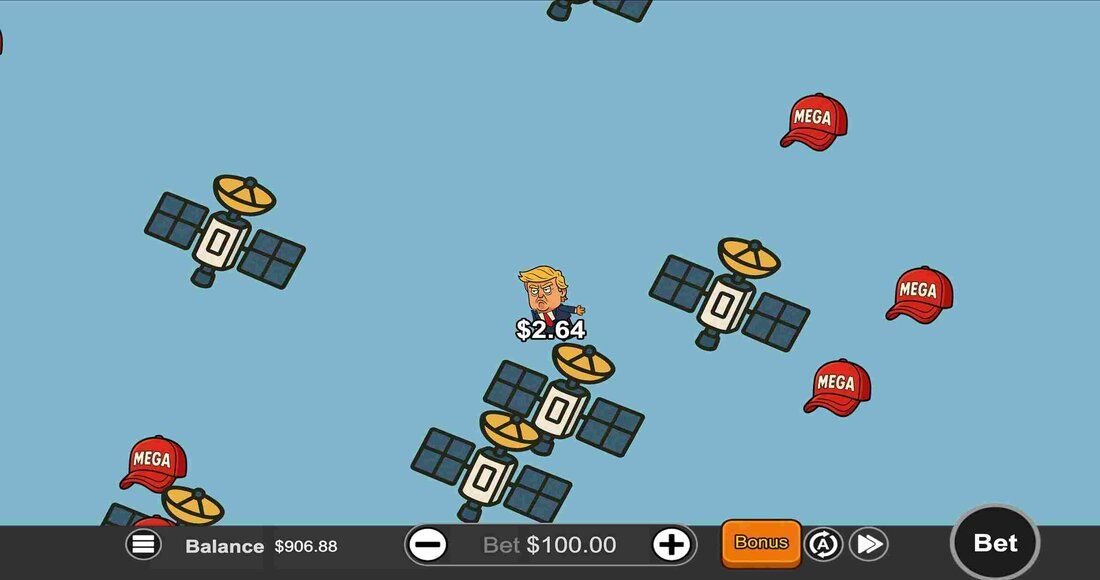
Drop the Boss is presented as a modern casino game with an action-focused format rather than a traditional three-reel slot layout. Depending on the version offered by a licensed operator, the game may use cascading symbols, bonus features, multipliers or special rounds. The visual theme is usually centred on defeating or dropping a boss while collecting winning combinations or rewards.
For UK players, the most important point is that the game remains a gambling product. Every spin, drop or round is generated by a random number generator. Previous outcomes do not influence the next one, and a calculator cannot identify a guaranteed winning sequence.
Understanding RTP and House Edge
RTP, or return to player, is the theoretical percentage of all stakes that a game returns over a very large number of rounds. For example, a game with a theoretical RTP of 96% has a long-term house edge of 4%:
House edge = 100% − RTP
If a player stakes £10,000 over a very long period on a 96% RTP game, the mathematical return would be approximately £9,600, with £400 representing the expected house edge. This is not a short-term promise. A player may win substantially more or lose substantially more during an individual session.
Before playing Drop the Boss, check the game information panel in the UK casino lobby. The displayed RTP can vary between configurations, and the casino’s rules may specify different values for different modes or features. A reputable operator should provide the relevant game rules and responsible-gambling information.
How the Odds Calculator Works
A basic calculator uses a few inputs:
- the amount staked per round;
- the number of planned rounds;
- the theoretical RTP;
- the estimated hit frequency, if available;
- the game’s volatility;
- any bonus or promotional value.
The simplest expected-value calculation is:
Expected return = total stake × RTP
Suppose a player wagers £1 per round for 500 rounds on a game with a 96% RTP. The total stake is £500, and the theoretical return is £480. The estimated mathematical loss is therefore £20:
£500 × 0.96 = £480
£500 − £480 = £20 expected loss
This result does not mean that the player will finish exactly £20 down. The actual outcome could be a profit, a small loss or a much larger loss because random variance is significant in casino games.
Adding a Promotional Bonus
Some UK casinos offer welcome bonuses, free spins or wagering promotions. A calculator can include the nominal bonus, but it must also account for wagering requirements. A £100 bonus with a 10x wagering condition may require £1,000 in qualifying bets before withdrawal. The effective value depends on eligible games, maximum stake rules, expiry dates and any contribution percentages.
Players should never treat promotional funds as guaranteed cash. Always read the terms, especially the maximum bet, game contribution, restricted payment methods and withdrawal conditions.
Estimating the Chance of a Winning Round
If the provider publishes a hit frequency, the calculator can estimate how often a round may produce any winning outcome. For example, a 30% hit frequency means that, on average, approximately 30 out of 100 rounds may produce a win of some type over a large sample.
It does not mean that every sequence of 100 rounds will contain exactly 30 wins. Random results may produce long losing streaks or several wins close together. Hit frequency also does not show whether the average winning amount is large enough to cover losing bets.
A game can have a relatively high hit frequency while offering mostly small wins. Another game may have fewer winning rounds but larger multiplier opportunities. That is why RTP, volatility and maximum win should be considered together.
Volatility and Bankroll Expectations
Volatility describes how frequently and how dramatically results may change. Low-volatility games tend to produce smaller, more regular wins. High-volatility games may produce longer losing periods, with larger payouts occurring less often.
If Drop the Boss includes boss battles, multipliers or bonus features, a substantial portion of its theoretical return may come from those events. A player who does not trigger a bonus during a short session may experience results very different from the published RTP. The calculator can show average expectations, but it cannot reproduce the exact distribution of outcomes.
| Calculator element | What it indicates | What it cannot guarantee |
|---|---|---|
| RTP | Long-term theoretical return | Profit in one session |
| Hit frequency | Approximate frequency of winning rounds | The result of the next round |
| Volatility | Potential size and distribution of swings | A specific winning pattern |
| Stake and rounds | Total exposure | Protection against losses |
| Maximum win | Published payout ceiling | How often the ceiling will be reached |
Practical Example for a UK Session
Imagine a player sets a £30 entertainment budget and chooses a £0.50 stake. The theoretical number of rounds is:
£30 ÷ £0.50 = 60 rounds
At a 96% RTP, the expected return across those stakes would be:
£30 × 0.96 = £28.80
The theoretical expected loss is £1.20. However, the player could lose the full £30 before completing 60 rounds, or win enough to extend the session. The correct approach is to regard £30 as the maximum affordable entertainment cost, not as a predicted loss or an amount that must be recovered.
Questions UK Players Commonly Ask
Does the calculator reveal the next winning round?
No. It uses statistical inputs and mathematical averages. It cannot access or predict the random number generator’s next result.
Can changing the stake improve the RTP?
Usually, no. The RTP is a property of the game configuration, not a reward for choosing a particular stake. A larger stake increases both potential wins and potential losses in monetary terms.
Is a high RTP enough to make Drop the Boss profitable?
No. RTP represents a long-term average and includes losing outcomes. A higher RTP generally means a smaller theoretical house edge, but it does not remove variance or guarantee profit.
Should I increase my stake after a losing streak?
There is no mathematical requirement to do so. Losing rounds do not make a win “due”. Increasing the stake after losses can accelerate bankroll depletion and is commonly associated with chasing losses.
Responsible Play in the United Kingdom
Use Drop the Boss only with a licensed UK operator and verify that the casino displays clear terms, contact information and responsible-gambling tools. Set deposit, loss or session limits before starting. Take regular breaks, avoid playing while distressed and never use borrowed money.
Players who feel that gambling is becoming difficult to control can use blocking software, bank gambling restrictions and support services such as GamCare. The UK National Gambling Helpline is also available for confidential advice.
Final Assessment
The Drop the Boss odds calculator is useful for planning exposure, comparing theoretical RTP values and understanding how a fixed bankroll may perform over many rounds. Its most valuable function is not predicting wins but showing the relationship between stake, number of rounds and expected house edge.
For a reliable assessment, confirm the exact RTP and rules in the casino’s information panel, consider volatility and bonus conditions, and treat every calculation as a long-term estimate. For UK players, the strongest strategy is disciplined budgeting: choose an affordable limit, avoid chasing losses and remember that randomness remains the deciding factor in every round.